A garden shed becomes useful when it makes ordinary gardening tasks easier. You can find the pruning shears, reach the watering can, and bring out the wheelbarrow without moving half the contents onto the lawn.
That convenience starts with the plan.
The best garden shed plans combine storage with the way you actually garden. Someone who raises seedlings needs a different arrangement from someone who mainly stores a mower, rakes, and bags of mulch.
Before choosing a design for its windows or roof shape, decide what will happen inside—and what should stay outside.
This article contains affiliate links. We may earn a commission if you purchase through them, at no additional cost to you.
Comparing garden shed designs? Explore My Shed Plans and review the available samples and current offer. Check the layout, openings, and construction details of your selected design before purchasing.
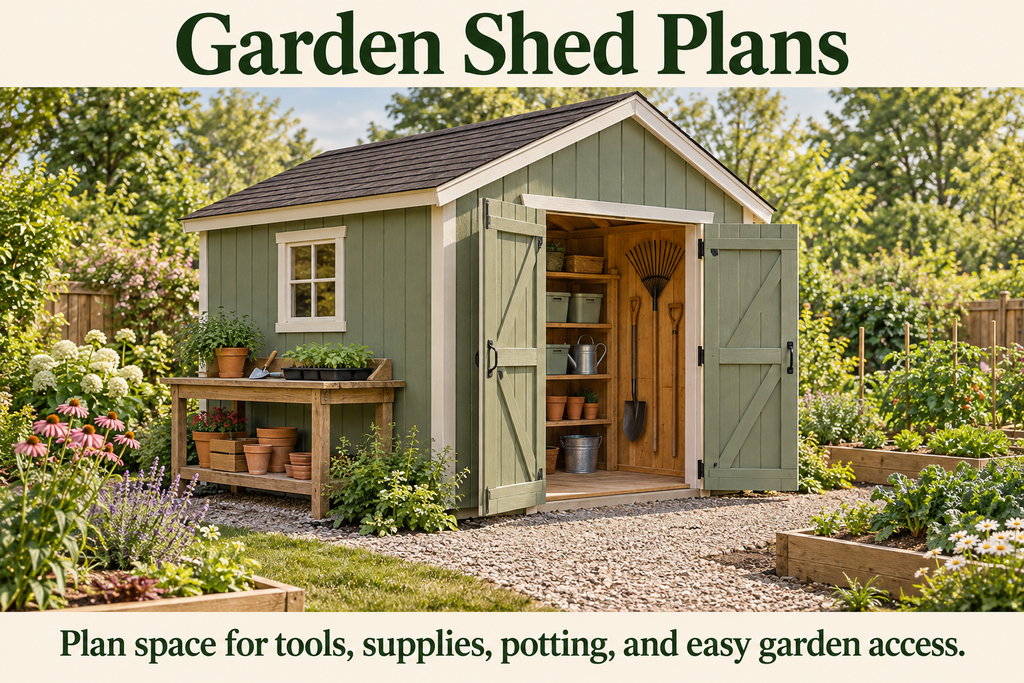
Start With Your Gardening Routine
Think about your last few gardening sessions.
Which tools did you use? Where did you fill pots? What was awkward to carry or difficult to find?
Write down the activities your shed should support. These might include:
- Storing long-handled tools.
- Keeping hand tools together.
- Organizing empty pots and trays.
- Storing suitable bagged supplies.
- Preparing containers at a potting bench.
- Parking a mower or wheelbarrow.
- Keeping stakes, netting, and plant supports organized.
Then rank them.
A potting bench is worthwhile if you regularly use one. If most of your work happens outdoors and the shed mainly holds equipment, that same floor area might be better left open.
Avoid designing around an imagined gardening routine that requires more space and equipment than you use.
1. Choose Between Storage-Only and Working Space
A garden shed can serve several purposes, but each one needs room.
Storage-only shed
This arrangement prioritizes shelves, hooks, and equipment parking. You enter, retrieve what you need, and work elsewhere.
It may suit a compact building, particularly when potting and cleaning already happen outdoors.
Storage with a potting bench
This adds a work surface and standing space. You also need somewhere for empty pots, potting materials, and completed containers.
The bench should not obstruct the route to tools or equipment.
Gardening workspace
A larger workspace may accommodate several tasks, but electricity, water, lighting, and environmental control require additional planning if you want them.
A basic storage-shed plan does not automatically include those features.
For choosing the overall footprint, see our shed size guide.
2. Divide the Interior Into Practical Areas
You do not need partitions to organize a garden shed. Assigning each wall or corner a purpose is often enough.
| Area | Typical contents | Layout priority |
|---|---|---|
| Everyday tools | Pruners, gloves, trowels, twine | Easy to reach near the entrance |
| Long tools | Rakes, hoes, spades | Clear removal path without catching other items |
| Potting area | Work surface, pots, trays | Standing room and nearby supplies |
| Bulky storage | Wheelbarrow, mower, large containers | Direct route to the doorway |
| Seasonal storage | Stakes, covers, spare trays | Accessible without blocking everyday items |
Keep the floor route clear between the entrance and the most frequently used areas.
Place awkward or heavy items where you can retrieve them without reaching over other objects. Use shelves and racks appropriate for their loads and attach them to suitable supports.
Our shed storage ideas offers more detailed organization options.
3. Design the Potting Bench Around the Work
A bench that looks attractive in a photograph may be too deep, too high, or too small for your routine.
Before including one in your shed plan, test a temporary work surface.
Set out:
- Your usual pot or seed tray.
- A container of potting mix.
- A scoop or trowel.
- Labels and a marker.
- Somewhere to place finished pots.
Then check whether you can work comfortably.
Check height and reach
Choose a working height that suits you and the task. Tall containers change the height at which your hands work, so test with the pots you actually use.
Avoid making the bench so deep that supplies at the back are difficult to reach.
Leave space beside the work area
A potting bench needs somewhere for materials before and after the task. If every inch is occupied by permanent storage, you may end up potting on the floor.
A removable tray or suitable work surface can help contain loose material, but choose materials and finishes appropriate to the exposure they will receive.
Plan cleaning
Think about how you will collect spilled soil and keep the area dry. Do not assume the shed floor is suitable for routine hosing down.
If you want a sink, plan the water supply and drainage as part of the project rather than adding an improvised discharge beside the foundation.
4. Choose Windows for Useful Light
Windows can make a garden shed more pleasant to use, especially around a potting bench.
However, every window occupies wall space that could otherwise hold storage.
Place windows after sketching the shelves and work surface. Check:
- Whether the opening interferes with tool racks.
- Where direct sunlight will fall.
- Whether you can operate the window over the bench.
- Whether nearby plants or structures will block the light.
- How the window will be flashed and maintained.
A window above a bench may work well, but its position needs to suit both the interior layout and the wall framing.
Our shed window guide explains the main choices.
A bright shed is not automatically a greenhouse
A shed with a few windows may still provide unsuitable light or temperatures for raising plants.
If growing seedlings is a major purpose, assess that requirement separately. Additional lighting or temperature control may be needed, and a greenhouse may better suit some uses.
Do not choose a standard storage plan on the assumption that adding windows will create a controlled growing environment.
5. Keep Equipment Access Separate From the Bench
A mower or wheelbarrow can dominate a small shed.
Mark its parking position and the path it follows through the doorway. Include handles and the space needed to turn.
Then check whether someone can reach the bench while that equipment is parked.
An end-wall doorway may suit a straight equipment route. A side doorway may provide more direct access to a work area. The best choice depends on the layout.
Double doors can help with larger items, but they also need room to open outside.
See our shed door guide before deciding on the opening. If there will be a raised threshold, consider access using our shed ramp guide.
Choose the interior layout before the decorative details. View My Shed Plans and check whether your selected garden shed design leaves enough space for tools, equipment, and any planned workbench.
6. Match Storage Conditions to the Contents
Not everything used in a garden belongs in an unconditioned shed.
Temperature and moisture can vary considerably, especially in a small building exposed to sun and seasonal weather.
Seeds
University of Minnesota Extension recommends keeping saved vegetable seeds cool and dry.
A hot or damp shed may not provide those conditions. You may be better off storing seeds in a suitable place indoors and bringing out only what you need.
Bagged supplies
Follow the storage instructions for fertilizers, potting products, and other materials. Keep packaging identifiable and protect products from conditions their labels warn against.
Avoid allowing bags and containers to become permanent obstacles around the entrance or bench.
Pesticides
EPA guidance recommends following label storage instructions, retaining pesticides in their original labeled containers, and keeping them secured away from children and pets.
If you store pesticides in the shed, plan suitable locked storage and follow the product’s temperature and ventilation requirements. Keep them away from food, animal feed, and medical supplies.
Do not transfer them into drink bottles or unmarked containers to make shelves look tidier.
Batteries and powered tools
Check the equipment manufacturer’s storage and charging instructions. A shed suitable for hand tools may not provide acceptable temperatures or conditions for batteries and chargers.
If electrical service is part of your plan, arrange an appropriate installation.
7. Address Moisture Without Sacrificing Storage Space
Garden equipment often enters the shed wet or covered in soil. Roof leaks, ground moisture, and poor drainage can add to the problem.
Plan for moisture management from the beginning:
- Choose a suitable site and foundation.
- Direct roof runoff appropriately.
- Maintain the siding clearances required by its manufacturer.
- Provide the ventilation arrangement suited to the building.
- Keep storage from obstructing vents.
- Allow wet equipment to dry when practical before enclosing it.
Ventilation alone does not correct a leaking roof or standing water beside the building.
Our shed ventilation guide explains airflow and moisture considerations. For the site, see how to prepare ground for a shed.
8. Consider an Outdoor Working Area
Some gardening tasks may work better beside the shed than inside it.
A nearby outdoor bench can provide space for messy potting jobs while keeping the interior available for dry storage. A convenient path can make moving tools between the shed and garden easier.
Before adding a covered area, decide whether it is part of the original design.
A porch or roof extension needs appropriate support, connections, roofing, and drainage. Do not assume it can be attached to existing trim or improvised after the shed is finished.
Also check how the outdoor work area affects access around the building.
9. Review the Plan Set Before Buying
For a garden shed, useful drawings should explain the building as well as any included features.
Look for:
- Dimensioned floor layout.
- Foundation and floor construction.
- Wall framing and openings.
- Roof framing and connections.
- Bracing and anchoring.
- Siding and weatherproofing details.
- Door and window installation information.
- Materials and fastener specifications.
- Details for any included bench, shelf, or porch.
Check what is optional. A photograph may show a bench, flower boxes, shelving, or a covered entrance that is not included in the basic drawings.
Our shed plans for beginners guide provides a broader checklist.
Common Garden Shed Planning Mistakes
Buying for appearance before measuring equipment
Choose a useful layout first, then compare exterior styles.
Installing deep shelves on every wall
Keep enough room to move, work, and retrieve bulky objects.
Treating all gardening supplies alike
Seeds, chemicals, tools, and batteries have different storage requirements.
Putting the bench across the equipment route
Test the layout with the mower or wheelbarrow in its normal parking position.
Adding too many windows
Balance daylight with useful wall space.
Assuming a garden shed will support plant growing
Evaluate light and environmental requirements separately from storage needs.
Frequently Asked Questions
What size garden shed do I need?
Measure your equipment and sketch the storage layout. If you want a potting bench, include its depth and the standing space needed to use it. There is no single size that suits every gardener.
Can a small shed include a potting bench?
Yes, if the bench leaves useful access and storage space. A compact or removable work surface may suit occasional tasks, provided its support and stability are appropriate.
Is a lean-to or gable roof better?
Either can work. Compare headroom, roof drainage, windows, and the interior arrangement. Our guides to lean-to shed plans and gable shed plans explain the differences.
Should I insulate a garden shed?
That depends on its intended use and contents. Insulation alone does not maintain a chosen temperature or control moisture. Review the complete plan using our shed insulation guide.
Can I store produce in the shed?
Do not assume it is suitable. Storage requirements vary by crop, and an ordinary shed may have unsuitable temperatures, moisture, pests, or nearby chemicals. Choose a storage location that meets the needs of the produce.
Choose a Plan Around a Typical Gardening Day
Imagine opening the shed, taking out your tools, completing a task, and putting everything away.
The layout should make each step straightforward. Frequently used tools should be accessible, the bench should have working room, and equipment should enter without blocking everything else.
A garden shed earns its space when it helps you spend more time gardening and less time rearranging storage.
Ready to compare garden shed layouts? Explore My Shed Plans, review the available samples and current offer, and confirm the features included in your chosen design before purchasing.
Resources
- University of Minnesota Extension: Saving Vegetable Seeds
- U.S. Environmental Protection Agency: Storing Pesticides Safely
- University of Minnesota Extension: Harvesting and Storing Home Garden Vegetables
Affiliate disclosure: Some links in this article are affiliate links. If you purchase through them, Beginner Shed Guide may receive a commission at no additional cost to you.
Building disclaimer: This article provides general planning information, not structural drawings or site-specific engineering advice. Follow applicable local requirements, suitable construction plans, and current product instructions. Obtain qualified assistance for structural changes, electrical or plumbing installations, and foundation questions.